
Community Bank ISAC
Advancing Community Bank Resilience Through Shared Intelligence
Discover the Advantages
Based on the Principle of Collective Public-Private Information Sharing and Response Defense, Tailored to the Unique Risks, Challenges and Opportunities Introduced by the Community Banking Ecosystem.
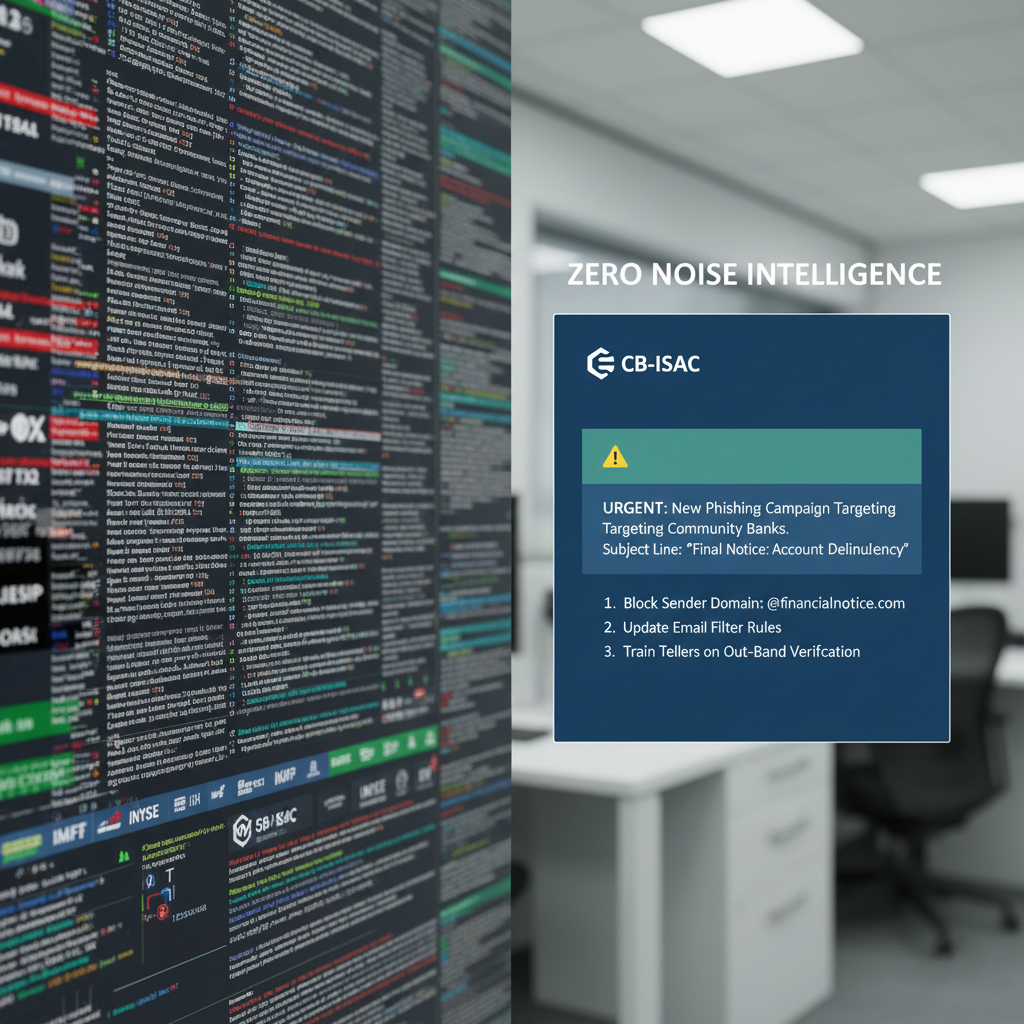
“Zero Noise” Intelligence (Hyper-Relevance)
The biggest complaint community banks have with global intelligence feeds is alert fatigue. They receive warnings about SWIFT attacks on central banks or DDoS attacks on Wall Street trading platforms that are irrelevant to them.
We only send alerts that apply to you. If it doesn’t impact a regional bank, a credit union, or the specific core processors we all use (Fiserv, Jack Henry, FIS), you won’t hear about it. Every email you get from us is urgent and relevant.
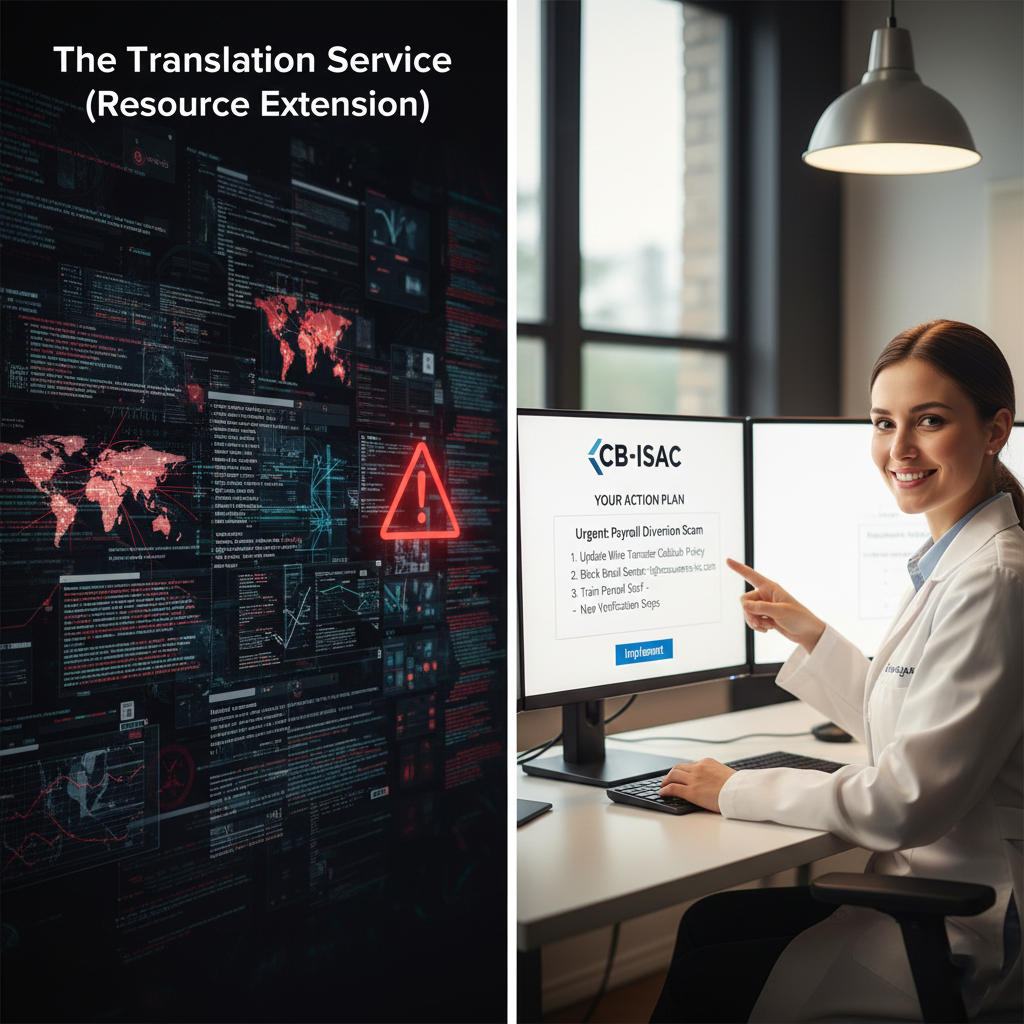
The “Translation” Service (Resource Extension)
Most community banks do not have a dedicated CISO or a threat intelligence analyst; they have an IT Director who also fixes printers and manages the helpdesk.
We don’t send you raw code or complex STIX/TAXII data feeds. We function as your outsourced Threat Analyst. We digest the complex data and send you a simple To-Do List‘: Block this IP, Patch this specific module, Warn your tellers about this specific email subject line.
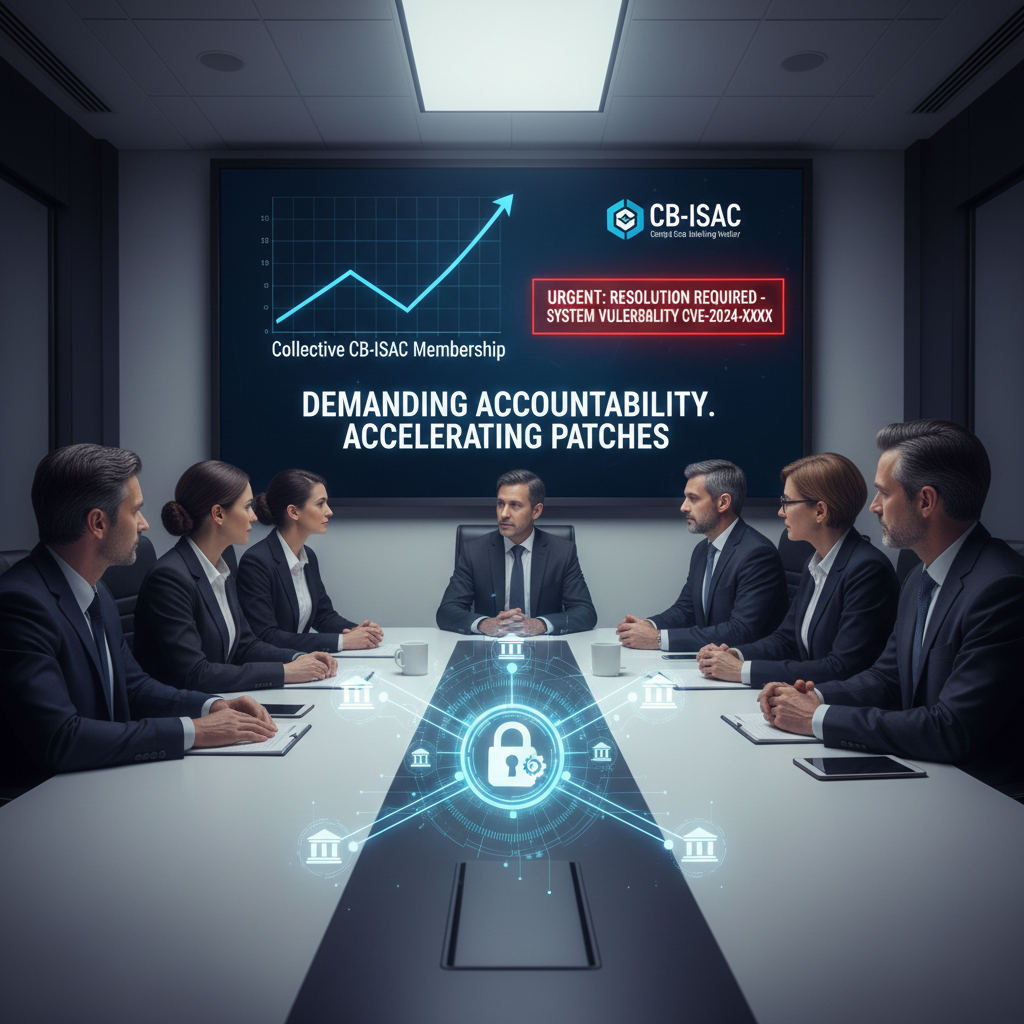
Collective Vendor Leverage
Community banks are often at the mercy of their third-party service providers (TSPs). An individual bank has very little power to demand answers from a giant vendor during an outage or security incident.
Alone, you are just one ticket in the queue. Together, we seek to include all of America’s Community Banks. When a core provider has a vulnerability, the CB-ISAC demands transparency and faster remediation timelines on behalf of the entire group. We hold the vendors accountable so you don’t have to.
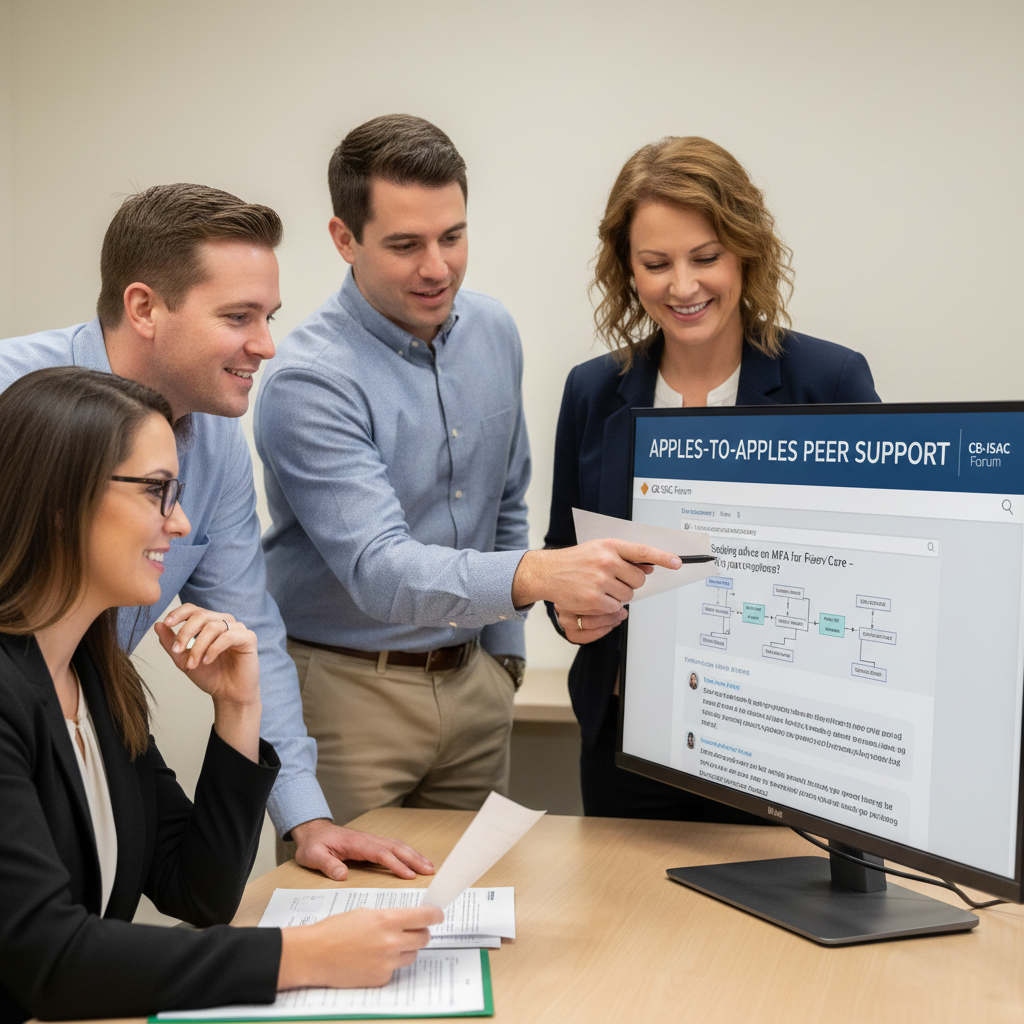
“Apples-to-Apples” Peer Support
In a global ISAC, a community bank might be hesitant to ask a “basic” question in a forum full of Fortune 500 CISOs.
This is a safe space. No question is too small. You are collaborating with peers who have the exact same budget, staff size, and regulatory pressure as you. Whether you need a template for a “Gramm-Leach-Bliley Act (GLBA)” risk assessment or advice on a new firewall, you get answers from people who actually understand your reality.

Regulatory “Check-the-Box” with Substance
Examiners (FDIC/OCC/State) love to see external validation, but they also know when a bank is subscribed to a service they don’t use.
Membership satisfies the FFIEC requirement for threat monitoring and information sharing.
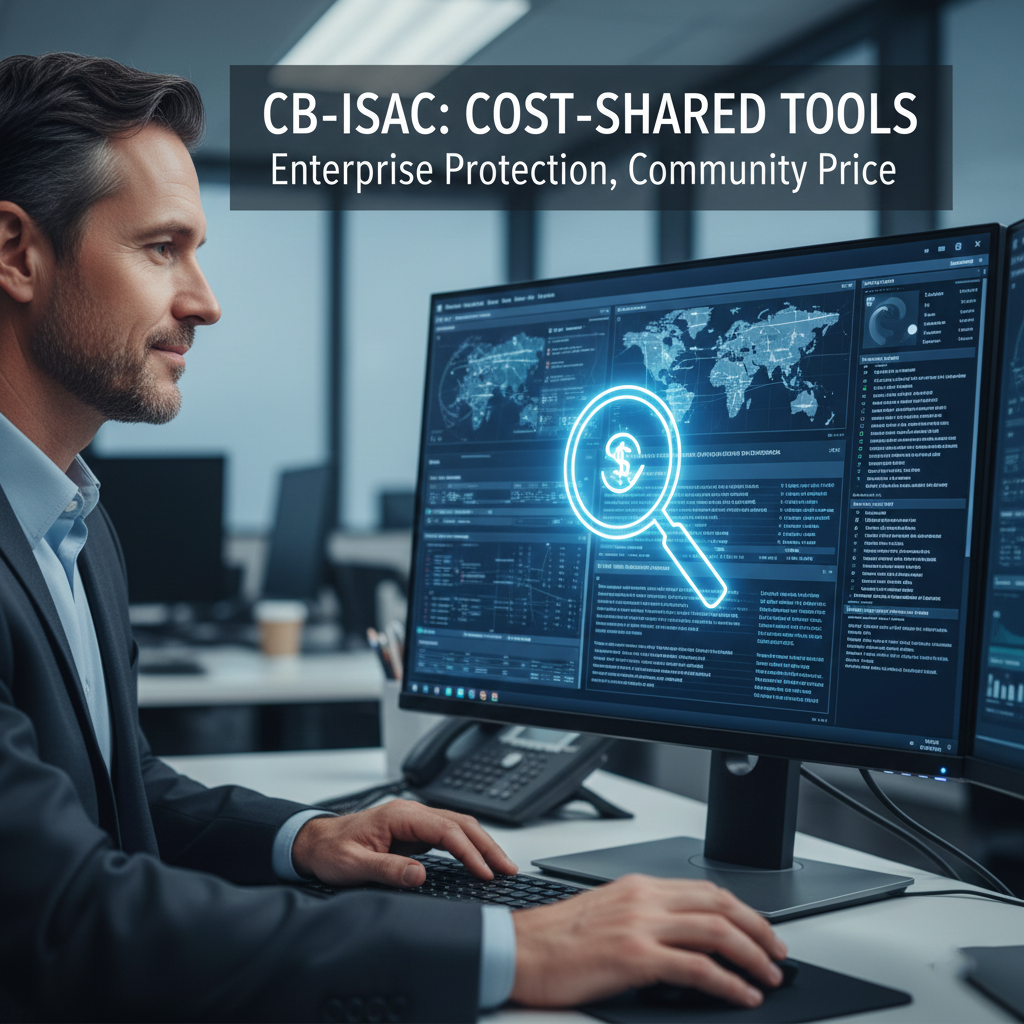
Cost-Shared Tools
Advanced threat hunting tools and dark web monitoring are often too expensive for a single community bank.
By pooling our resources, the CB-ISAC provides enterprise-grade threat hunting tools and dark web scanning services. You get the protection of a million-dollar security budget for the price of a gym membership.
Community Discussions
Discussions are highly practical, tactical, and focused on day-to-day operational security, compliance, and budget realities.
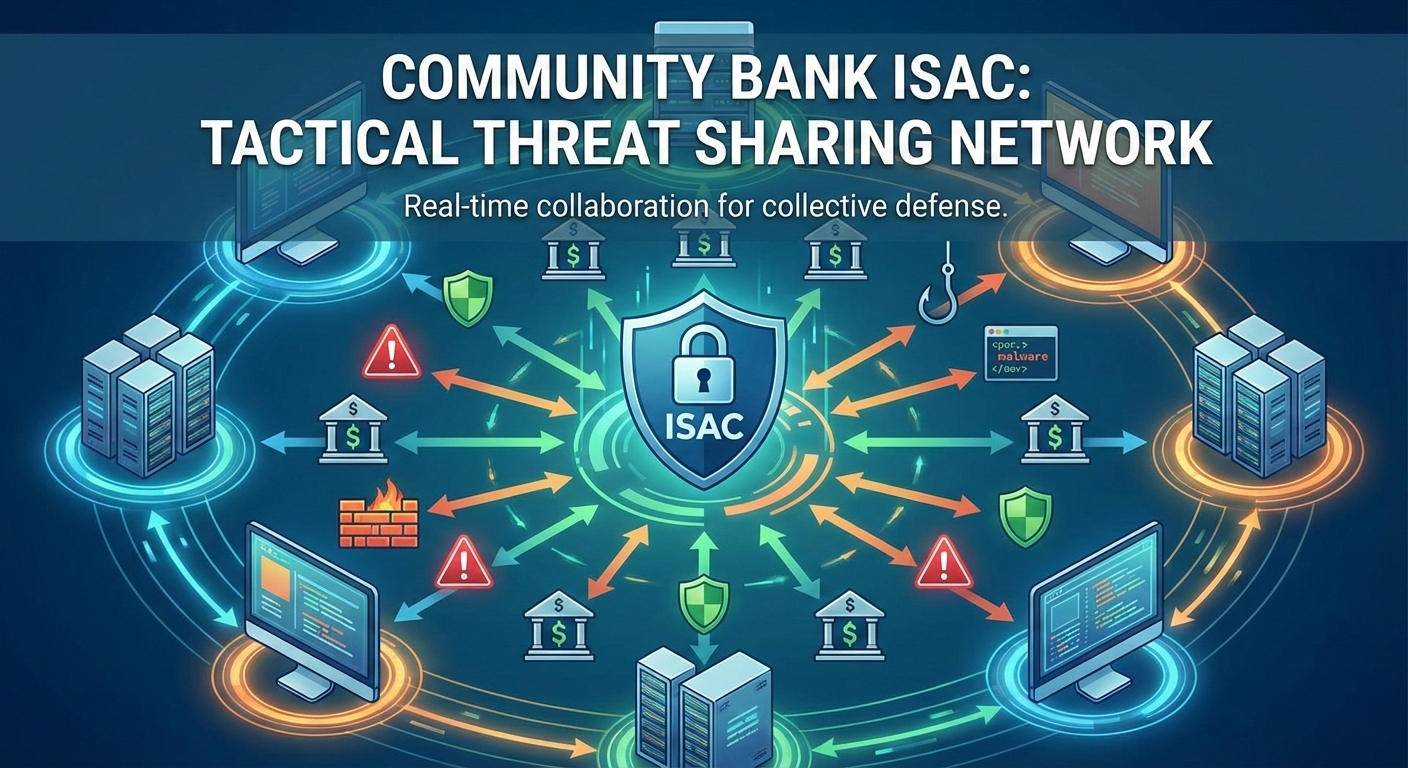
Tactical Threat Sharing
These are immediate, actionable warnings where members are essentially saying, “Is anyone else seeing this right now?”
Payment Fraud Modalities: Discussions on the latest flavors of fraud targeting community banks:
-
“Has anyone seen a spike in wire transfer requests coming from [Specific Domain]? We got two in the last hour.”
-
“We just blocked a new Business Email Compromise (BEC) attempt where the attacker spoofed the CEO’s personal Gmail. What specific training are you giving your tellers on out-of-band verification?”
Specific Malware/Ransomware IOCs: Sharing indicators of compromise that IT teams can immediately deploy.
-
-
“RED ALERT: Check your network logs for connections to [Specific IP Address]. We identified it as a C2 server for a new Ryuk variant targeting smaller financial institutions.”
-
“What is your preferred endpoint detection and response (EDR) solution for dealing with file-less malware? We need something simple.”
-
Phishing/Vishing Campaigns: Sharing the exact details of social engineering attacks that might bypass email filters.
-
-
“A wave of calls is hitting customers in [Specific Region] claiming to be from the IRS demanding debit card verification. Please warn your branches immediately.”
-
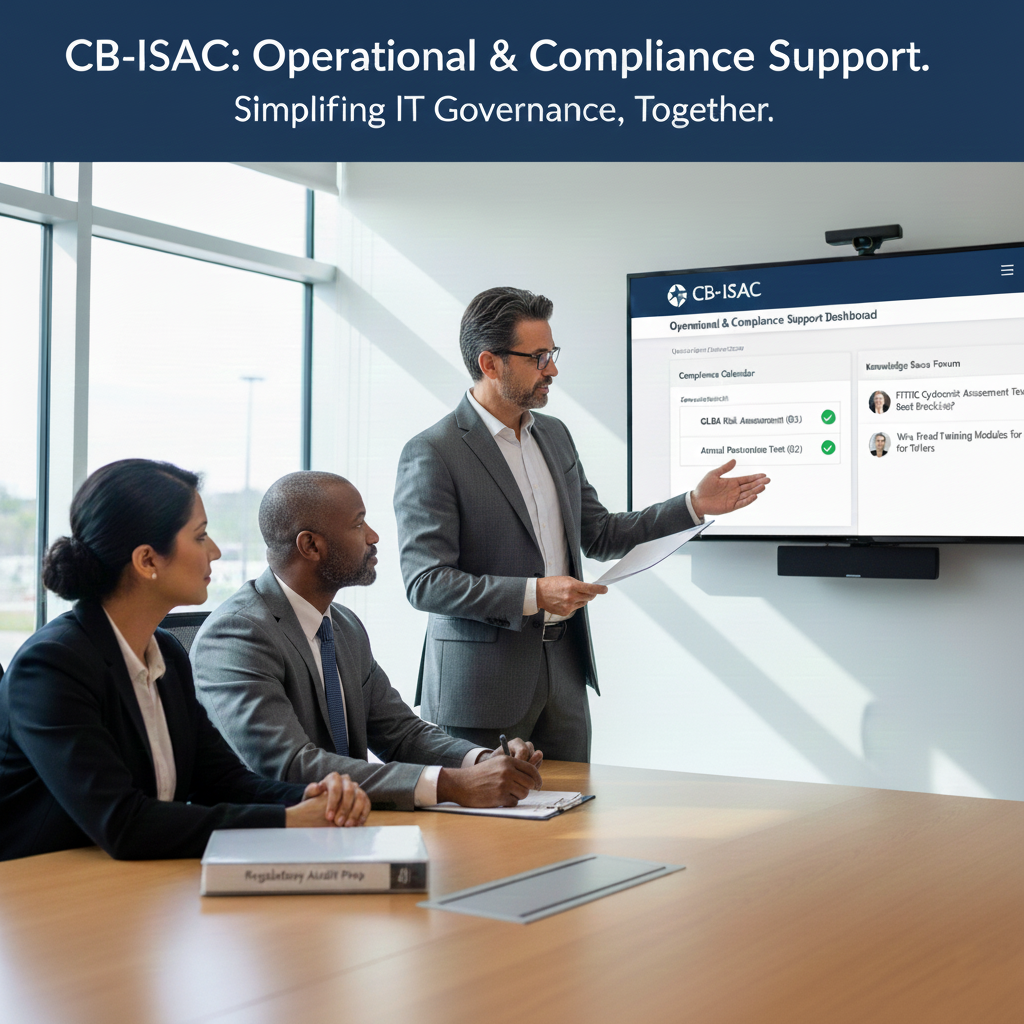
Operational & Compliance Support
Since community banks often lack specialized regulatory or security staff, the ISAC serves as a peer-driven knowledge base for compliance and operational efficiency.
FFIEC and Audit Prep: Preparing for IT examinations and audits.
-
-
“My FDIC examiner is asking for a NIST Cybersecurity Framework gap analysis. Does anyone have a stripped-down template suitable for a bank with less than $500M in assets?”
-
“How are other banks handling their annual GLBA risk assessments? Are you using a consultant or doing it in-house?”
-
Budgeting and ROI: Sharing experiences with security products and services to ensure cost-effectiveness.
-
-
“We are looking to implement a new Multifactor Authentication (MFA) solution. Which vendor is the most user-friendly for customers and the easiest to integrate with [Specific Core Processor]?”
-
“What is a reasonable budget percentage for cybersecurity for a bank our size (under $1B assets)?”
-
Staffing & Skills: Discussing the challenges of finding qualified staff.
-
-
“Does anyone have success using managed security service providers (MSSPs) for 24/7 monitoring, and if so, who do you recommend that understands community banking regulations?”
-
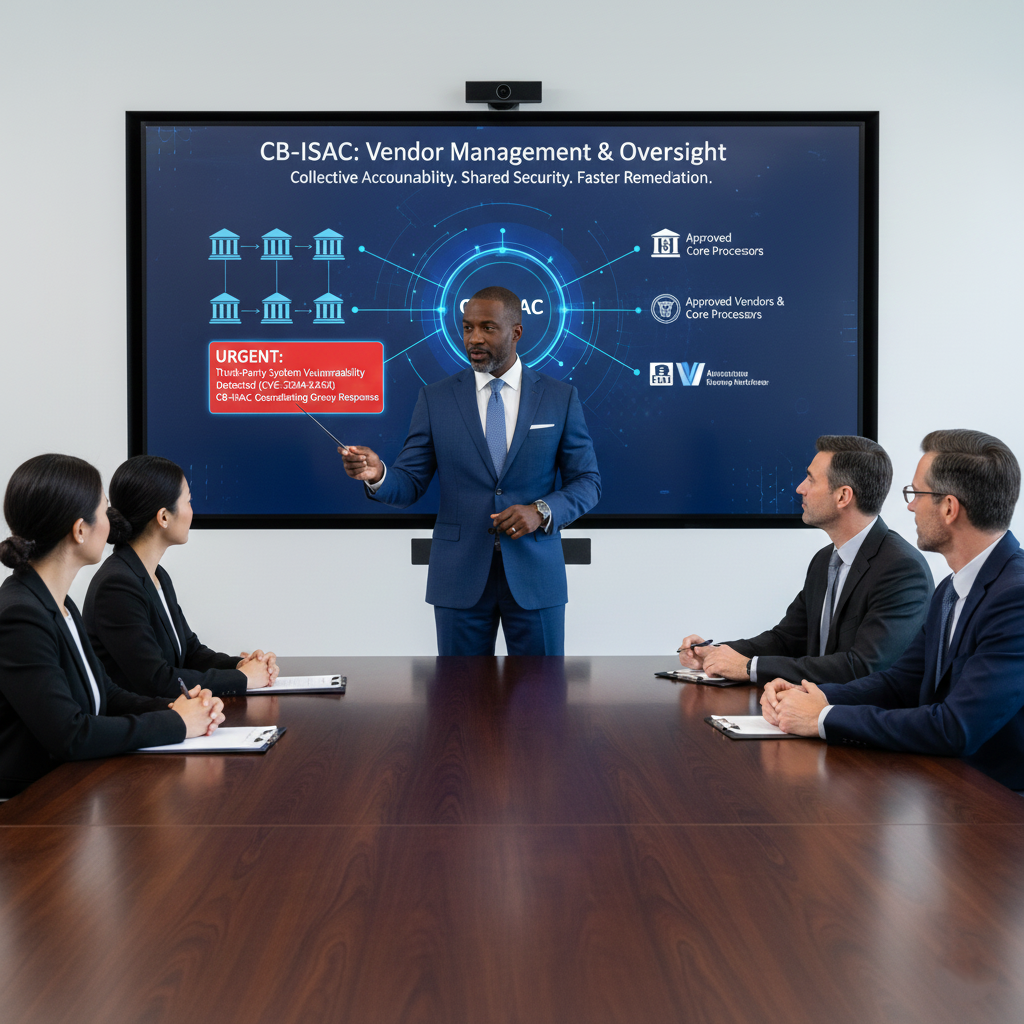
Vendor Management & Oversight
This is a critical area where collective action is essential, as many community banks share the same core banking systems and third-party vendors.
Vendor Outage/Incident Coordination: Centralizing communication during a shared vendor incident.
-
-
“[Vendor Name] payment portal has been down for 2 hours. What is their official status? Have they provided an ETA for service restoration and what is the current workaround everyone is using?”
-
Vendor Due Diligence Reviews: Sharing insights on a vendor’s security posture to make the initial due diligence process easier.
-
-
“We are considering moving to [New Cloud Solution]. Can anyone share their recent audit findings (SOC reports) on their data center security?”
-
Shared Vulnerabilities: If a bug is found in widely used banking software, the CB-ISAC ensures all members are patched or mitigate the risk simultaneously.
-
-
“Heads up: There is a zero-day vulnerability being exploited in the [Specific ATM Software Version]. Please verify your terminals are on the latest patch immediately.”
-
Essentially, the discussions are designed to be a highly efficient way for a time-strapped IT professional to learn exactly what to do, what to buy, and what to tell their Board, all while staying within budget.
“Collaboration is the strongest defense—when community banks share intelligence, they turn isolated targets into a united front against cyber threats.
IACI is the platform that makes this possible.”
Join The Community Bank ISAC
A Community Bank ISAC (Information Sharing and Analysis Center) is a specialized “digital neighborhood watch” designed specifically for regional and local financial institutions that often operate with leaner cybersecurity resources than global giants. Acting as a central nexus, this organization facilitates the secure, anonymous sharing of threat intelligence—ranging from phishing campaigns targeting small business lenders to vulnerabilities in specific core banking software used by smaller entities. By pooling data and expertise, the ISAC transforms individual vulnerabilities into collective defense, providing community bankers with real-time, actionable alerts and mitigation strategies that are tailored to their unique regulatory environments and risk profiles, effectively leveling the playing field against sophisticated state-sponsored actors and ransomware gangs.